Gold Coast property blog
How Long Does It Take to Sell a House? Gold Coast Timeline
Updated 29 September 2026
Selling a Gold Coast property has three separate clocks: preparation, time on market and settlement. Current Robina sales give a useful local example. In the three months to 24 August 2026, half of the recorded house sales had sold within 34 days. The figures were 37 days for units and 32 days for townhouses. After a contract is signed, the Queensland Government says settlement is most commonly another four to six weeks.
That means a practical plan is often measured in months, not days. Allow time to prepare the property, roughly a month or more to find a buyer, then another four to six weeks to reach settlement. Your property may move faster or slower. The point is to plan around the whole process, not just the day an offer is accepted.
What does “sold” actually mean?
People often use “sold” to mean different things. An agent may say a property is sold when the owner accepts an offer. A portal may not mark it as sold until conditions are met. The owner does not receive the sale money or hand over possession until settlement.
For planning purposes, use these three stages:
- Preparation: getting the property, price evidence, photography, marketing and paperwork ready.
- Time on market: from launch until the owner and buyer sign a contract.
- Contract to settlement: the agreed period while the legal and financial work is completed.
If you only count the time on market, you can end up booking removals, finance or the next purchase too early.
Stage 1: preparing the property for sale
Preparation can take a few days or several weeks. It depends on what the property needs and how quickly the owner can make decisions.
A simple property may only need cleaning, garden work, minor maintenance, photography and a clear price plan. A property with repairs, styling, tenants, legal questions or a tight move may need more time.
Do not start with a long renovation list. Start with the buyer you are trying to attract. Then decide what needs to be fixed, what only needs to be presented better and what buyers are unlikely to reward.
The same applies to price. Before launch, compare recent sales with the properties buyers can choose now. A high asking price can make the property look poor value beside those alternatives. Read the full guide to pricing a Gold Coast property to sell before the campaign begins.
Stage 2: how long it takes to find a buyer
There is no honest single average that fits every Gold Coast property. A renovated townhouse in Robina, a waterfront property in Broadbeach Waters and an apartment in Southport compete with different stock and different buyers.
The latest verified Robina figures are a useful example, not a Gold Coast-wide promise. From 24 May to 24 August 2026:
- 42 house sales: half had sold within 34 days.
- 17 unit sales: half had sold within 37 days.
- 10 townhouse sales: half had sold within 32 days.
“Half had sold within” means half were quicker and half took longer. It does not mean every property should sell inside that number. You can see the current source and method on the Robina property market page.
The first few weeks still matter. That is when new listings usually receive their cleanest test against the current competition. If suitable buyers inspect but do not act, the owner needs a plain explanation. Is the issue price, presentation, the property itself, the sale method or a small buyer pool? More advertising is not always the answer.
Stage 3: contract conditions and settlement
An accepted offer is not the finish line. The signed contract sets the price, conditions and settlement date. Finance, building and pest inspections, legal checks and other agreed conditions can affect the path from contract to settlement.
The Queensland Government says the settlement period is negotiated between the owner and buyer and is most commonly four to six weeks after the contract is signed. It also notes that settlement periods can range from 30 to 90 days. Read the official Queensland settlement guidance.
The exact contract matters. The Queensland Law Society lists the current REIQ residential contract forms and recommends legal advice for property transactions. See the Queensland Law Society contract information and have your solicitor or conveyancer confirm the dates and conditions that apply to you.
What can make the sale take longer?
Some delays are outside the owner's control. Buyer finance can take longer. A building issue may need more investigation. A settlement date may be chosen to line up with another move.
Other delays often begin before launch:
- The property is not ready. Repairs, presentation and documents are still being organised after marketing starts.
- The asking price does not match the evidence. Buyers compare the property with recent sales and current alternatives, not the owner's preferred number.
- The campaign is hard to act on. Poor photography, limited inspection access or slow follow-up can make a suitable buyer move to another property.
- The owner changes direction during the campaign. Unclear plans around price, sale method or the next move can slow decisions when an offer arrives.
None of these guarantees a slow sale. They are the parts worth checking before the property goes online.
How to build a realistic moving date
Work backwards from the date that actually matters. That may be the day you need the sale money, the day you can move into the next property or the date a school or work change begins.
Then allow for:
- property preparation and campaign setup;
- time to find and negotiate with a suitable buyer;
- the contract conditions;
- the agreed settlement period; and
- a buffer for anything that does not happen on the first attempt.
Do not treat a local sale-time figure as a promise. Use it as one input beside your property type, suburb, competing listings, price evidence and preferred settlement date. If you are still deciding whether to move now, compare those factors in the guide on selling now or waiting on the Gold Coast.
Frequently asked questions
Can a Gold Coast property sell in a week?
Yes, it can. A fast contract may happen when the property, price, presentation and available buyers line up. But a one-week contract is not the same as a one-week move. Contract conditions and settlement still come afterwards.
Does auction make the process faster?
Auction creates a fixed campaign date, but it does not guarantee a sale by that date. The better sale method depends on the property, likely buyers, evidence and the owner's terms.
When should I organise my next purchase?
That depends on your finance, risk tolerance and contract terms. Some owners sell first, some buy first and some line up both settlements. Speak with your broker or lender and solicitor before relying on sale money for another purchase.
What is the best way to avoid a timing surprise?
Write down the dates, costs and dependencies before launch. Keep the time on market separate from the settlement period. Then agree on what happens if the first buyer or first date does not work.
The practical answer
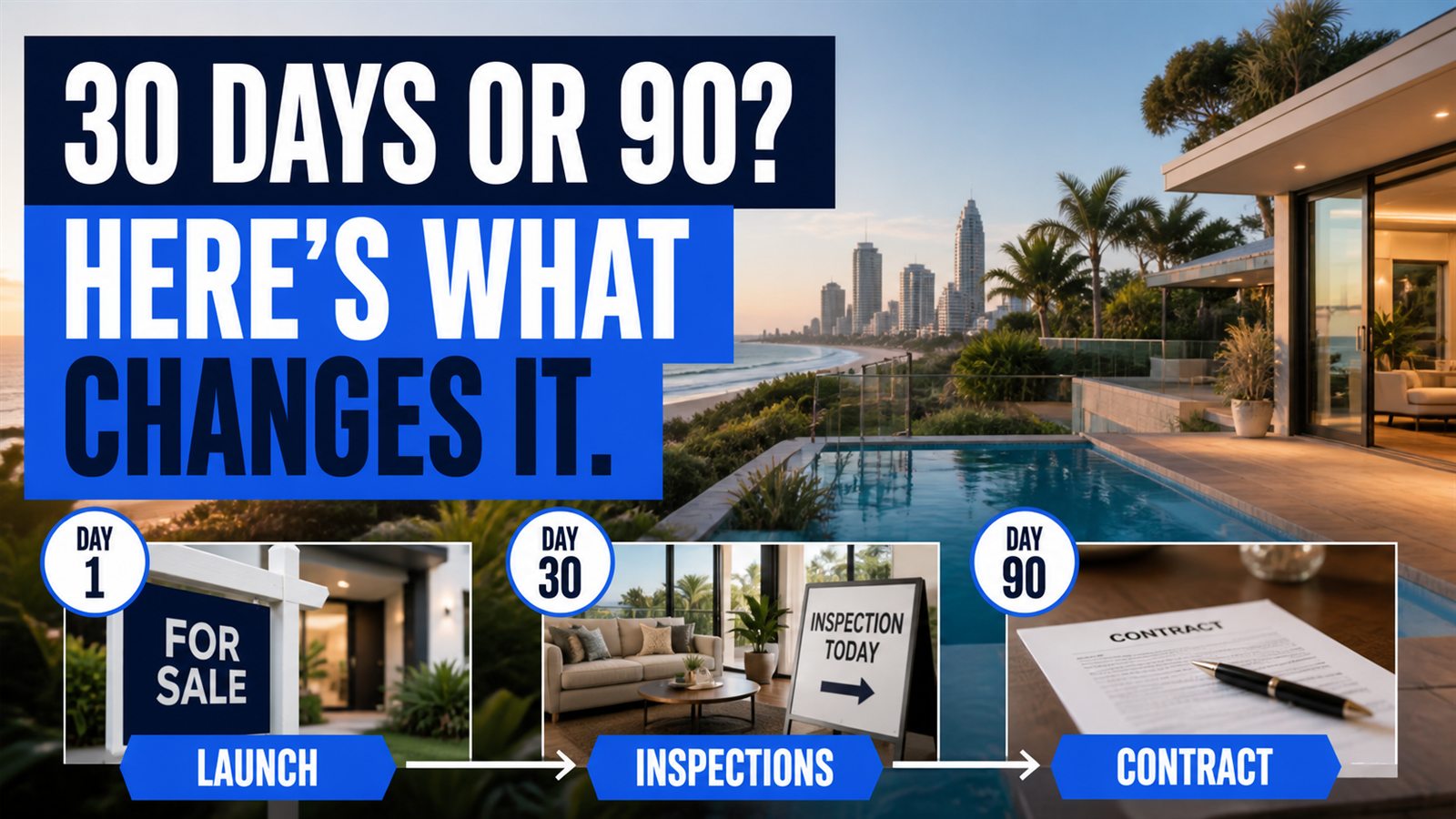
For a Gold Coast property owner, the useful answer is not “30 days” or “90 days”. It is a three-part plan. Get the property ready, allow a realistic period to find a buyer, then add the contract and settlement time.
The current Robina evidence shows half of the recorded sales in each property group had sold within 32 to 37 days. Queensland's usual settlement period adds another four to six weeks after signing. Use those numbers as planning evidence, not a guarantee. Your own dates should come from the property, the live competition and the contract your solicitor has checked.