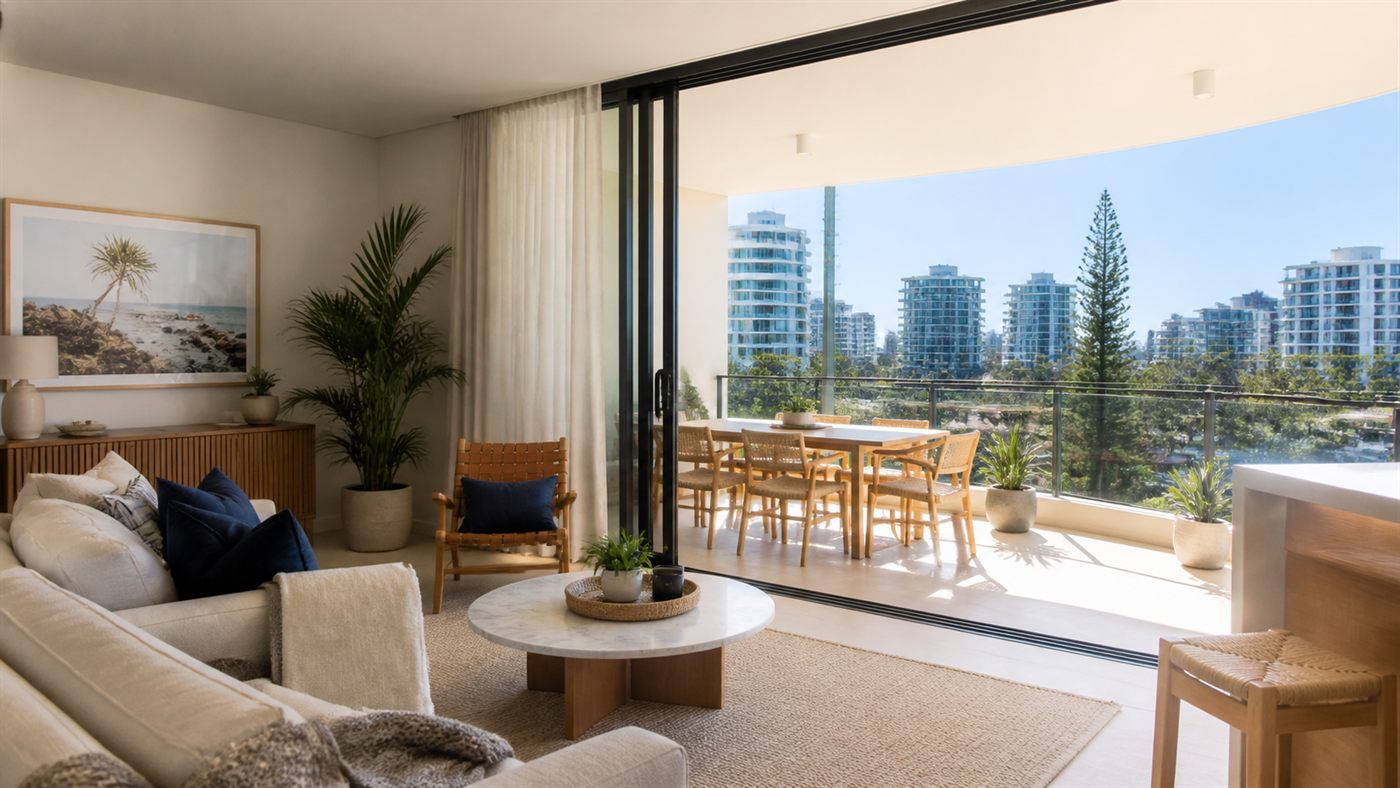
Your everyday life
Location, stairs and lifts, pets, parking, visitors, storage, noise, security and the places you use every week.
Gold Coast apartments
Less maintenance and a more convenient lifestyle can sound ideal. The harder part is knowing which apartment, what it will really cost, and whether selling your current home improves your overall position.

Start with the life you want
The right move may give you less upkeep, better security, easier access to shops and services, and more freedom to travel. But it can also mean less storage, shared facilities, new rules and ongoing body corporate costs. The useful question is not simply, “Do I like this apartment?” It is, “Will this building and this move suit how I actually want to live?”
Location, stairs and lifts, pets, parking, visitors, storage, noise, security and the places you use every week.
Purchase price plus stamp duty, legal costs, moving, levies, insurance, maintenance and possible future works.
Whether to sell first, buy first, line up settlements or wait until the numbers and the right apartment are clearer.
Before looking at listings
A cheaper apartment does not automatically mean a better financial outcome. Start with a realistic sale range for your current home, subtract selling and moving costs, allow for the full apartment purchase cost, and consider what happens to any money left over.
If pension, super, tax or aged-care decisions are involved, get personal advice before acting. The page can help you ask better questions; it cannot decide those matters for you.
Work through my moveCommon questions
It can, but selling does not automatically mean you lose your pension. Your home is normally excluded from the assets test while you live in it. After a sale, the amount set aside for another principal home may be temporarily exempt, while money left over may be assessed under the assets and income tests. Check your own position with Services Australia or a licensed financial adviser before you commit. Read the current Moneysmart guidance.
Look beyond the advertised quarterly levy. Check the administrative and sinking funds, insurance, upcoming works, special levies and the building's financial statements. The Queensland body corporate certificate shows key levy and insurance information, and the records and meeting minutes can reveal decisions and contracts you may help pay for. See the Queensland Government buyer guidance.
There is no one answer. It depends on your finance, the likely sale range of your current home, suitable apartment supply, settlement flexibility and how much uncertainty you can comfortably carry. Work out both sides before signing either contract.
Test the life, not just the view. Think about lifts, noise, pets, parking, visitors, storage, accessibility, balcony use, building rules, nearby services and how the location feels at different times of day.
Have the contract and disclosure material reviewed by the right legal professional. Ask about levies, sinking-fund health, insurance, defects, planned works, special levies, by-laws, pets, parking, management contracts and recent committee or general-meeting decisions.
That is the best time to compare your options. You do not need to list your home or choose an apartment yet. Start with the lifestyle you want, the likely numbers and the safest order. Then you can decide whether moving actually improves your position.
Your next step
If you are early in the process, use the free Move Plan to organise your questions. If you want someone working specifically for you as a buyer, see how buyer representation works. Apartment options can then be discussed against your needs—not pushed at you because they happen to be available.